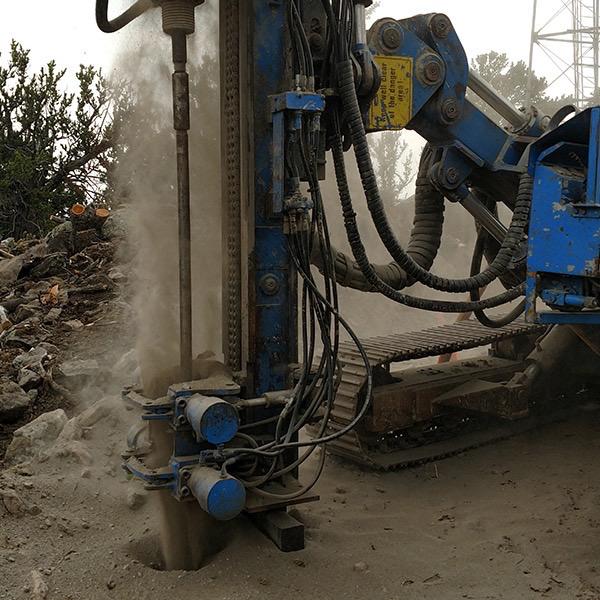
JET GROUTING
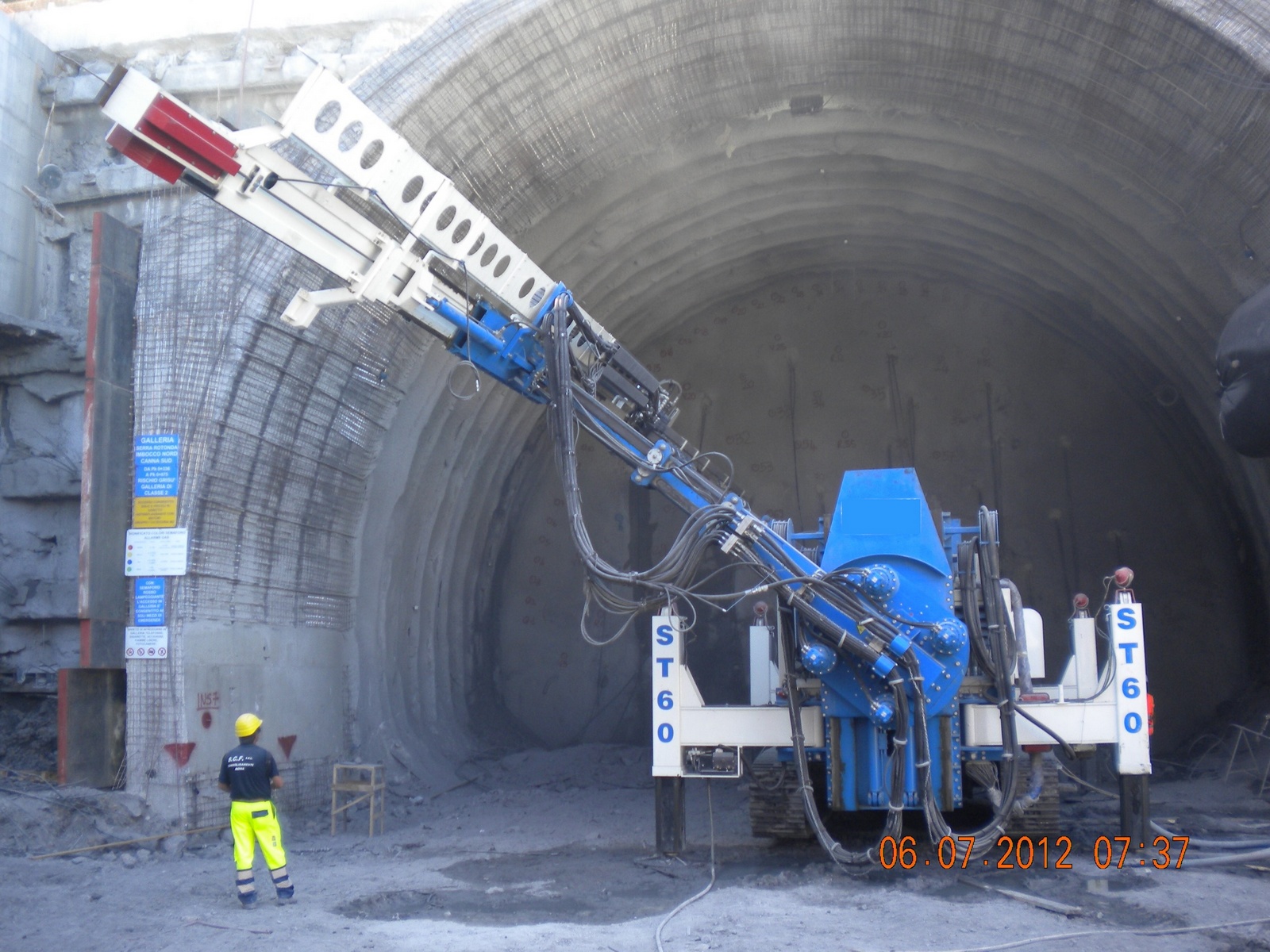
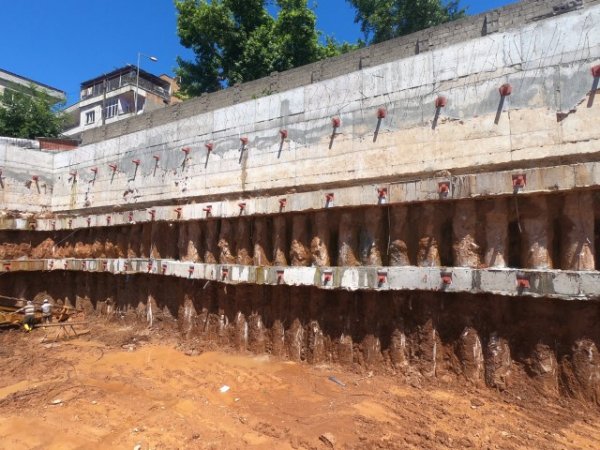
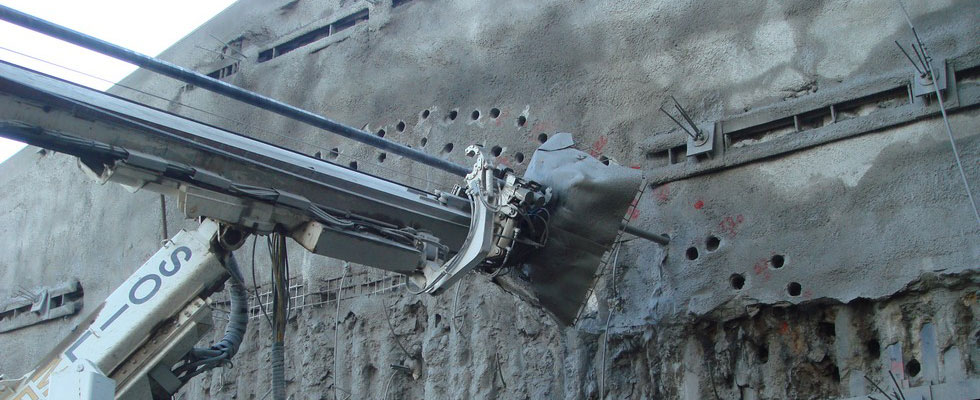
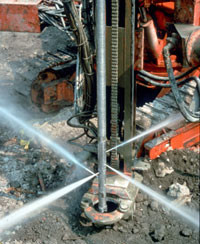
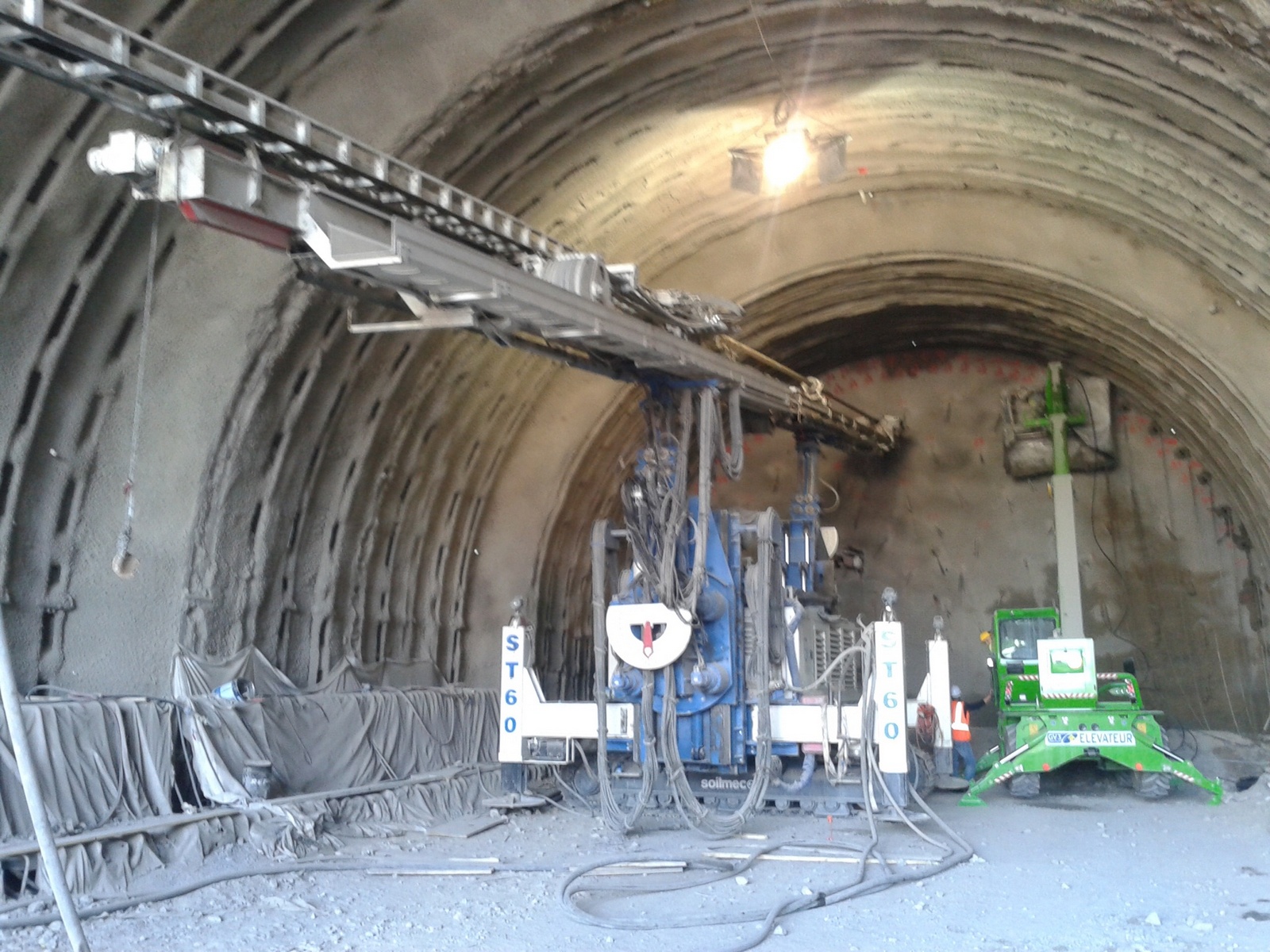
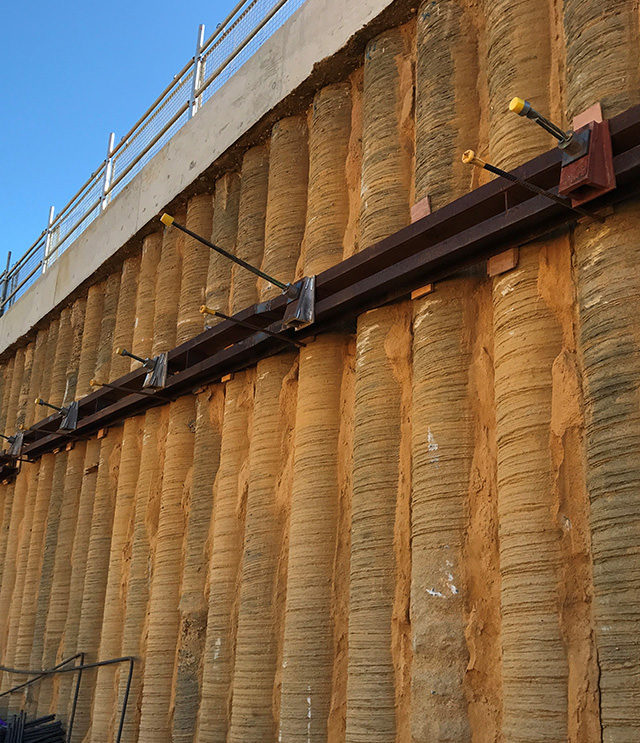
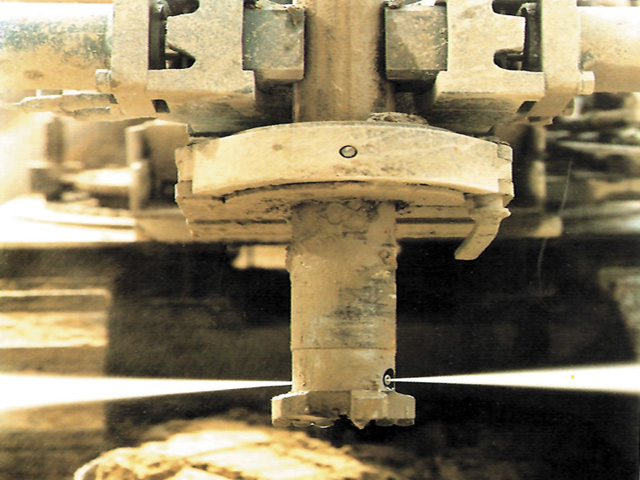
Jet Grouting uses high pressure jets to replace in-situ soils with a soil-cement mixture. The size of the columns can be modified and controlled during construction by adjusting the pumping pressure, mix design, volume and extraction rate. Jet grouting is commonly used to create barriers to groundwater, to stabilize soils, and to support foundations and excavations.
Despite the need for highly specialized equipment and expertise, jet grouting can be used in most ground conditions, can be installed vertically or at angles, and can be constructed above or below the water table.
Applications for Jet Grouting:
VOID FILLING
Void filling is a technique used to stabilize the subsurface
and prevent settlement of structures, causes from natural or man-made cavities
forming in the soil. These voids can be reduced or eliminated using fill such
as Portland cement, cementitious and/or chemical grouts, and/or expansive
polymers/foams. To perform this technique, a drill string or pipe is typically
advanced into the void, after selected material is pumped into place and
allowed to cure.
Applications for Void Filling:
*
Foundation Support
*
Retrofit of Existing Structures
*
Ground Improvement
*
Preventing Water Seepage
COMPACTION GROUTING
Compaction grouting involves the injection of a low slump,
mortar grout to densify loose, granular soils and stabilise subsurface voids or
sinkholes. The injection point is raised or lowered to create stacked bulbs of
grout.
Application For Compaction Grouting :
*
Settlement Reduction
*
Ground Improvement
*
Stabilization of Sinkholes
CHEMICAL GROUTING
Chemical grouting is a technique used in geo structural and
groundwater applications. Permeation grouting can be used to fill void spaces
in soils in order to increase soil bearing capacity and also to control/arrest
groundwater. Polyurethane and other chemical grouts can be used to seal cracks
in structures and rock masses, and also as a means of filling voids underneath.
Applications for Chemical Grouting
:
*
Soil & Rock Mass Stabilization
*
Groundwater Control
*
Underpinning
created with
WordPress Website Creator .